

—By Sarah Bathke, BA ’25 (journalism), UO Alumni Association communications generalist
Artificial Intelligence (AI) and its many iterations have dominated headlines and reshaped work and daily life for millions of people around the world. According to the Pew Research Center, about half of adults in the US use AI chatbots. In Oregon, over 110 data centers, many of which support AI usage, have sprung up across the state in the last decade, from Hillsboro to The Dalles.
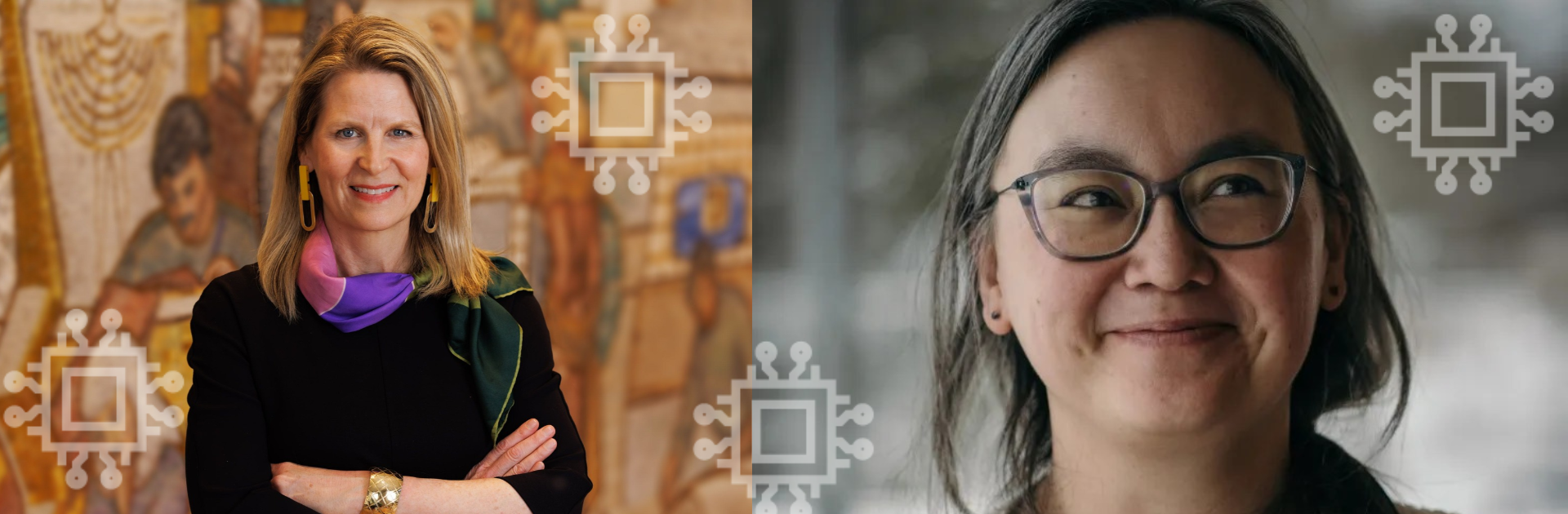
Though AI usage is becoming more widespread, Pew Research Center data also shows that Americans are skeptical about its benefits on society. Concerns about AI’s impacts on the economy, environment, and people’s overall wellbeing are prevalent. Two UO alumnae, Liz Shuler, BA ’92 (journalism), and Selena Deckelmann, BA ’99 (computer and information science, Clark Honors College), are key voices in national conversations about the ethical use of AI. Both Ducks were recognized in Time Magazine lists this year as leaders in labor and technology who are working to support and protect people as AI grows.
Working for the many
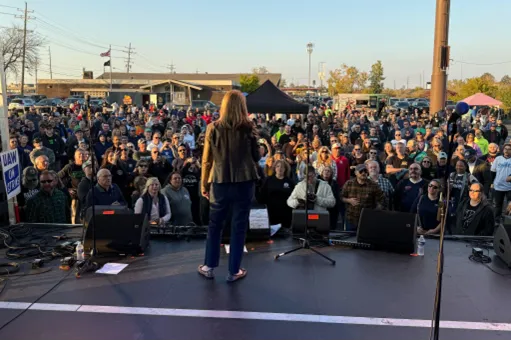
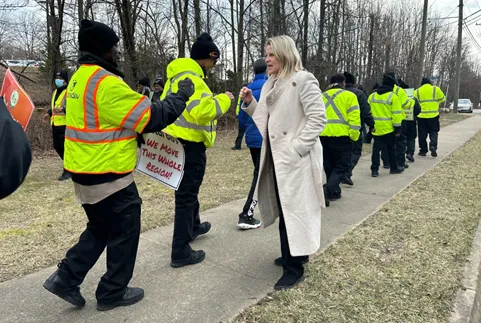
Liz Shuler is the president of the American Federation of Labor and Congress of Industries (AFL-CIO), the largest federation of labor unions in the United States. AFL-CIO represents 65 affiliated unions and nearly 15 million workers, from office assistants and teachers to firefighters, electricians, grocery store workers, and more.
When Shuler found out she was going to be part of TIME’s 100 Most Influent People in AI 2026 list under the "Shapers" category, she said it was an unexpected honor, but she's glad that workers' voices are being represented in a conversation that has been dominated by Big Tech CEOs and billionaires.
"It’s an exciting moment for the labor movement, because unions have become more relevant in this rapidly changing economy and world of work,” Shuler said. “[AFL-CIO] is the only organization in the economy that is helping shape worker protections, safety, and guardrails around AI at scale, so that worker privacy, security, and knowledge are protected.”

Shuler has been preparing for these conversations for years. After attending a forum in 2012 on the “American Dream” and how fast it is disappearing for many, she started mobilizing resources at AFL-CIO.
"We were doing the research and talking to our members about this a decade ago, and then in 2021 we established our AFL-CIO Technology Institute, so that we would be prepared for this moment. AI is moving so fast, we knew we needed to develop the expertise, policy know-how, and mobilization capacity to establish guard rails around Big Tech and keep humans in control."
That preparation has resulted in real wins and protections for workers. In October, with pressure from Shuler and the union members of AFL-CIO, California passed a law regulating how AI can be used in workplace discipline and termination. Work like this is part of AFL-CIO's Workers First AI Agenda, which Shuler is helping lead across the country.
Leading a federation of unions for nearly 15 million people is a lot to carry. When fighting for workers’ rights, Shuler said she relies on her Oregon roots to keep her going, from the sense of purpose her community gave her to the balance and sense of belonging that Oregon's nature provides. The Portland-area native, who has called Washington, DC home for many years, still leans on the patience and resilience Oregon helped her develop. Her time as a student at the UO gave her a strong foundation for a lifelong career as an organizer.
"Studying journalism gave me the foundation and skills to be a critical thinker, ask probing questions, and synthesize information quickly—all skills I use to this day as an organizer and leader," she said.
Her innovative leadership was recently honored at the UO as well. November 13 marked the grand opening of the Liz Shuler Labor Library, housed at the Labor Education and Research Center, located on campus across the street from Hayward Field. The collection of books, journals, and more holds the memories and collective knowledge of labor movements across Oregon and internationally.
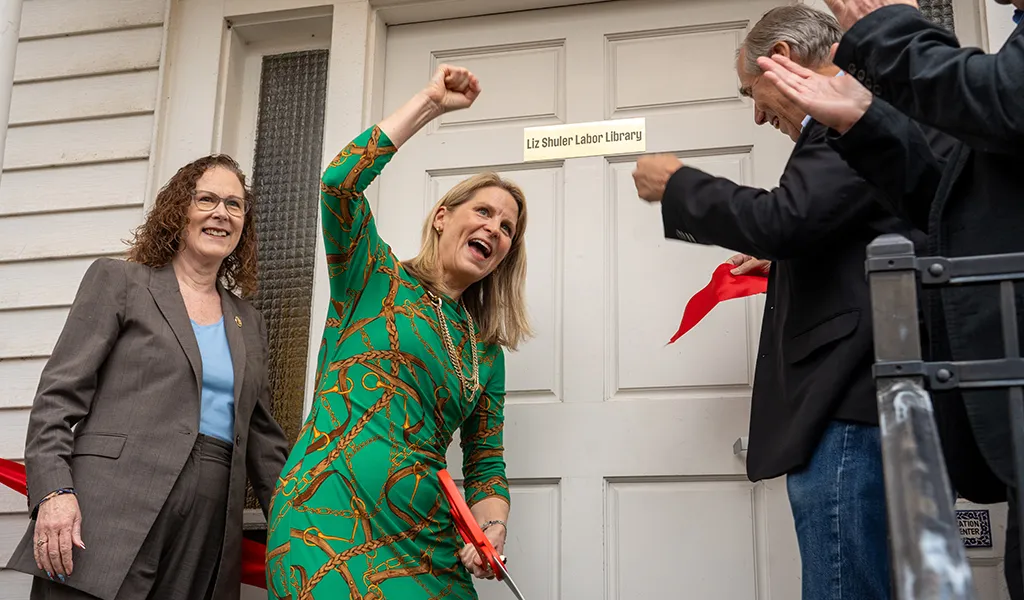
Photo credit Andy Nelson, University Advancement
At the ribbon-cutting ceremony, Shuler shared that the very first unionization campaign she helped lead was for office workers at Portland General Electric, where both of her parents worked—her mother in the office and her father as a lineman. The campaign failed, but it still moves her to this day thinking about the women who stood up with courage to start that fight.
"I hope this library gives those stories a place to stay alive," she said.
People-powered information
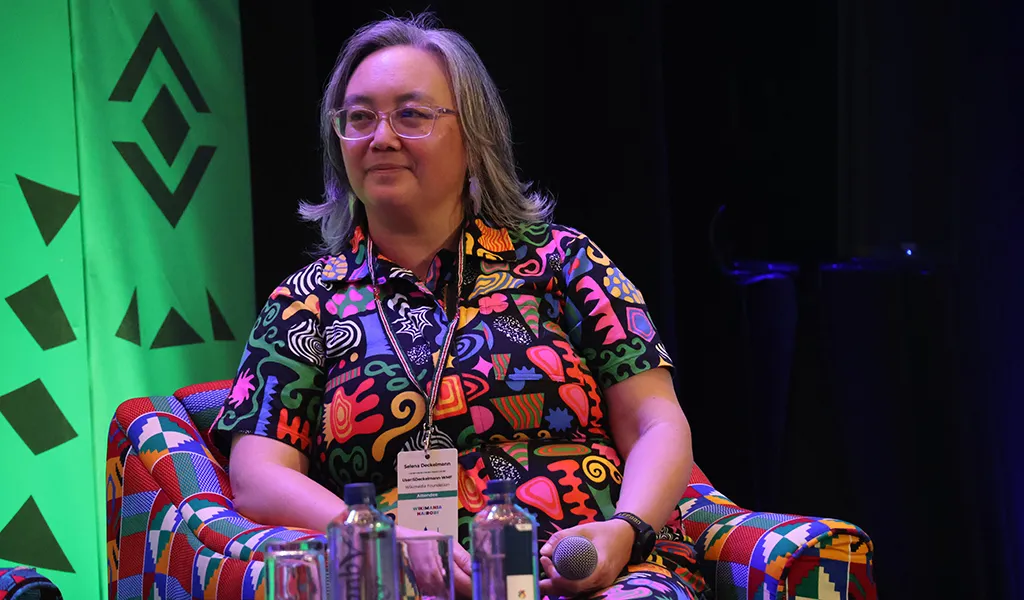
Photo courtesy of Wikimedia Commons.
Selena Deckelmann, chief product and technology officer at the Wikimedia Foundation, leads staff across Wikimedia projects and supports the nearly 265,000 volunteers that create and edit content for Wikipedia every month.
Before she was named by TIME as a 2026 TIME Executive of the Year in Tech and Data, Deckelmann first developed an interest in technology at the University of Oregon. She'd grown up admiring her grandfather, a ham radio operator and TV repairman who had mountains of parts in his backyard. Her family had an Apple computer at home, and when she moved into a residence hall on campus as a freshman, the university had just installed ethernet.
"I had friends in the dorm . . . and they all taught me about the internet. They showed me how to build a computer from scratch. We went out and bought motherboards and CPUs, and we were big nerds about like, ‘How could we upgrade these motherboards?’"
Deckelmann said she could build a computer from scratch by the spring term of her first year at the UO. Her developing skills led to her first job in tech at the campus Computing Center. There, she helped other students with issues on their computers and even helped develop a security system for the university's computing infrastructure. This project became the focal point of her Clark Honors College thesis.
With help from faculty, staff, and peer mentors, Deckelmann pivoted from majoring in chemistry to computer science. Her Oregon education and student experience helped kickstart a more than 20-year career in open-source technology. Now, she uses her expertise as a mentor, teaching others how to learn about evolving technology and AI and providing a steadfast presence with a positive vision.
She’s led the implementation of several initiatives aimed at protecting the work of Wikipedia volunteers and prioritizing access for human users. One such example is a new system for volunteer editors at Wikipedia that advises them on sourcing the facts they provide. Wikimedia also blocks or throttles 30% of automated crawler requests that scrape the information from Wikipedia.
"I think basic things help people the most. Sometimes we can get lost in all the details, but if you're are educated about your fear and you have an idea of where you want to get to, I think, maybe you're still afraid, but at least you can move forward," she said. "If I can help people know more about what's going on, I can empower them to make decisions on their own so they don't have to wait for me. They don't have to wait for anybody."
That spirit of helping others is what has driven Deckelmann’s work on massive nonprofit tech projects, from Mozilla to Wikimedia and OpenStreetMap. The free commons and knowledge are the beauty of the internet, and Deckelmann said those things are now under threat.

Photo courtesy of Wikimedia Commons.
"I think a lot of it is going to survive, but some of it is probably not. The thing that I really hope comes out of this moment is that there are more things like Wikipedia that end up existing in the world than there are today," she said. "Projects [like Wikipedia] are so fulfilling for people who are involved with them. I just want to find ways for us to enable projects like that, forever. I think this is the great joy of having created the internet."
Despite concerns about how AI is impacting information and scraping the work of Wikipedia's volunteers, Deckelmann is confident in the future of technology and information.
"One thing that I really believe in, from my open-source work over all these years, is that for the most part, people actually want to share. They want to do things that help other people . . . There's always lots of problems to deal with, but a lot of people want to help other people and share."
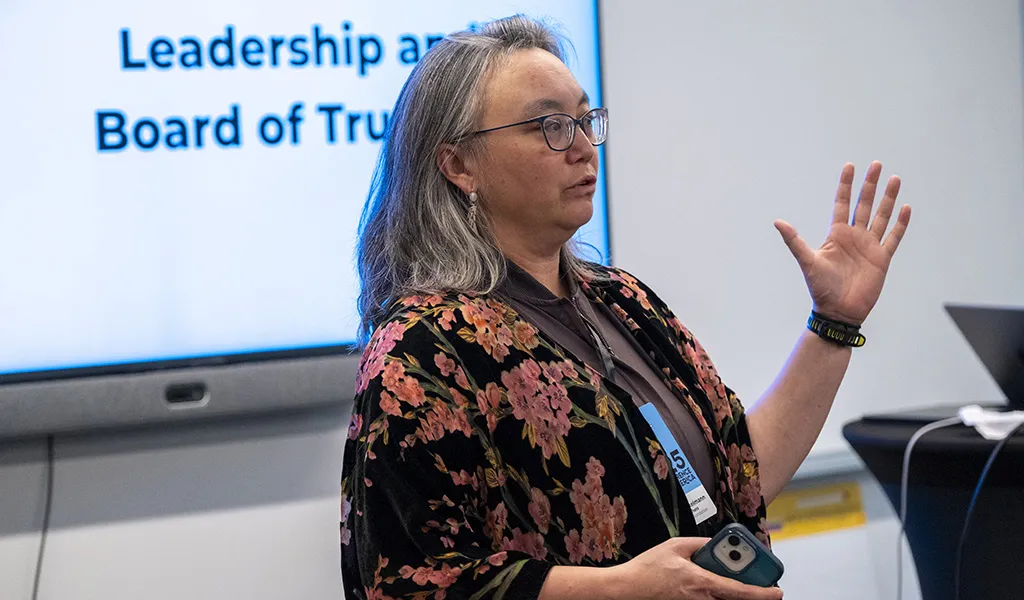
Photo courtesy of Wikimedia Commons.
Ducks supporting Ducks
The UO Alumni Association and the Duck Career Network are here to support alumni navigating AI and the evolving workforce. Whether you're looking to understand how it works or how you can integrate it into your skillset, the Duck community is full of experts and resources for you.
Recently, the UO Alumni Association held a webinar on Unlocking AI's Potential, supporting Ducks in understanding how they can use this developing technology in their work. AI's impact is undeniable, and it continues to shape the work of people in tech and outside of it.